
 Olivia Snook
Beyond the Flames: The Economic Impact of Wildfires
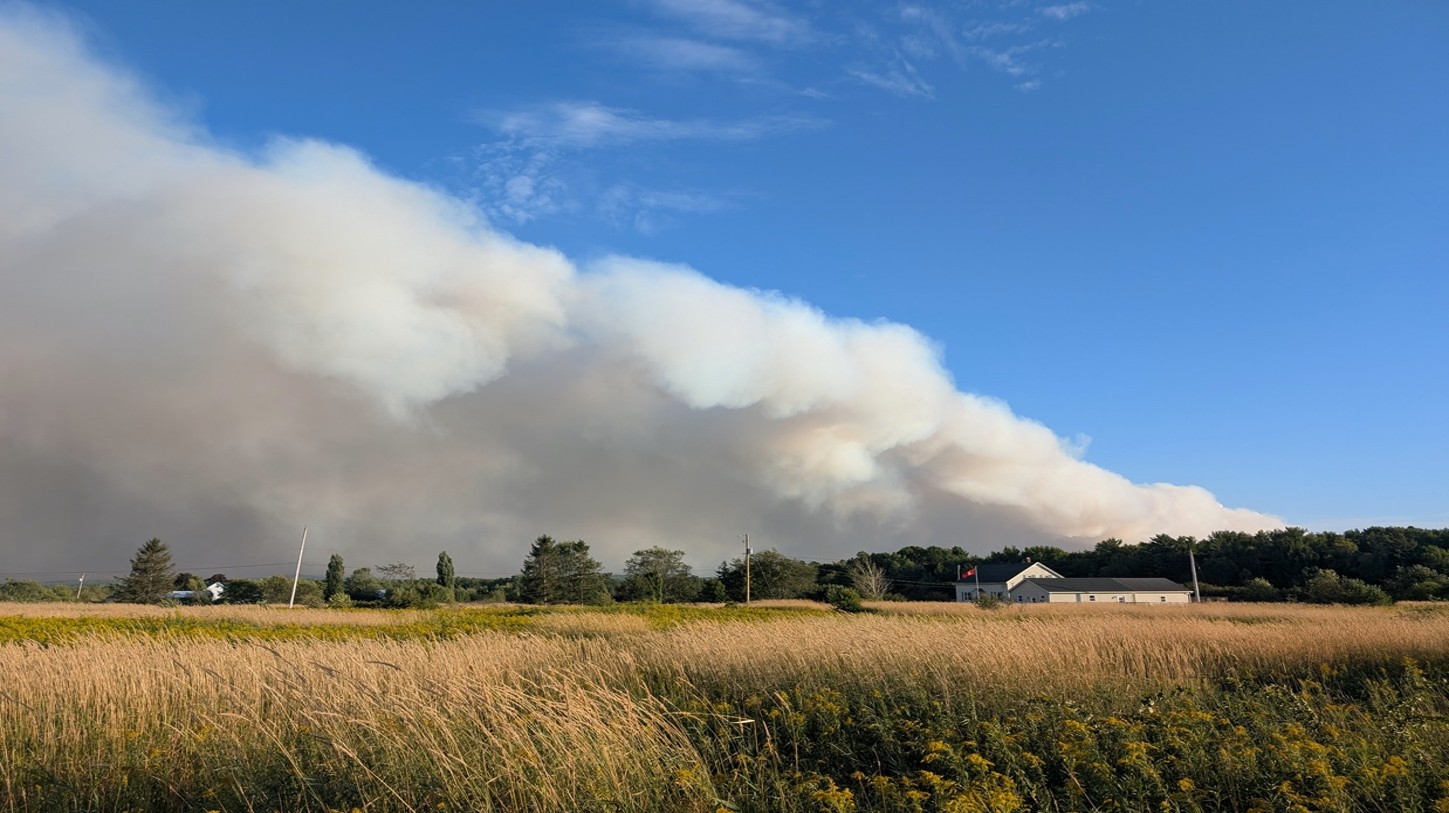
When people think about wildfires, they often think first about flames, smoke, evacuations, and destroyed homes. Those are immediate and serious threats, but disasters do not end once the fire is put out. For many people affected by the 2023 Halifax wildfires, the real crisis continued afterward, as they faced insurance claims, lost income, damaged property, business disruptions, and the cost of rebuilding. This raises the question: why does economic recovery matter so much after environmental disasters like the 2023 Halifax wildfires?
The 2023 Halifax wildfires began in late May and forced thousands of residents to evacuate. Homes were destroyed, businesses were disrupted, and many residents faced financial uncertainty. The Tantallon wildfire alone caused over $165 million in insured damage, showing that the disaster was not only an environmental emergency but also an economic security crisis. Economic security refers to people’s ability to maintain stable livelihoods and meet their basic financial needs. It is an important part of human security because threats to income, housing, and financial stability can directly affect people’s overall well-being and ability to recover from crisis.
Economic Security and Human Security
Human security focuses on protecting people from threats to their survival, livelihood, and dignity. Evans and Sahnoun argue that the primary focus of security should be the well-being of individuals rather than the protection of states alone. This perspective helps explain why economic recovery is such an important part of disaster response.
It is for these reasons that the Halifax wildfires are part of a much larger pattern. Across Canada, wildfires are becoming more destructive and more expensive. Jain et al. explain that the 2023 Canadian wildfire season was record-breaking in both scale and impact, affecting communities across the country and placing pressure on emergency systems, governments, and recovery programs. Wang et al. also show that many Canadian communities are located close to wildfire hazards, meaning that the distance between fire risk and human disaster is becoming increasingly smaller. Halifax is therefore not an isolated case; it is one example of how climate-related disasters are creating new human security challenges.
Did Recovery Programs Protect Economic Security?
Insurance and government disaster assistance played an important role in reducing economic insecurity after the Halifax wildfires. Insurance helped many residents begin the process of replacing damaged property and rebuilding homes. One year after the Tantallon wildfire, the Insurance Bureau of Canada reported that insurers were still supporting recovery efforts and that many claims had been settled. This matters because financial recovery can determine whether people are able to return home, rebuild their lives, and avoid long-term economic hardship. However, residents without insurance or with inadequate coverage often faced greater financial challenges and relied more heavily on government assistance and community support.
Government support was also important. The federal government later provided disaster recovery funding to Nova Scotia for the 2023 wildfires, flooding, and Hurricane Dorian through the implementation of disaster assistance arrangements. The Government of Nova Scotia also introduced disaster financial assistance for uninsurable wildfire losses. These programs show that governments have a role in filling gaps that insurance alone cannot cover. From a human security perspective, protecting people requires more than emergency evacuation; it also requires helping people recover economically after the immediate danger has passed. As Evans and Sahnoun argue, security involves protecting individuals from threats to their well-being, including those that persist after the immediate crisis has ended.
However, these programs do not mean that everyone recovered equally. Insurance coverage varies, and not every loss is fully covered. Some people may face delays, deductibles, underinsurance, or losses that are considered uninsurable. This is especially important for vulnerable populations. Mathias argues that wildfire preparedness and response must include planning for unhoused people and other vulnerable groups because disasters often affect people differently depending on their resources and living conditions (2023). In other words, economic security after a disaster depends partly on what people already had before the crisis.
MacFarlane and Khong argue that human security extends beyond immediate physical threats, and includes broader social and economic conditions that shape people’s well-being. This helps explain why some residents were more vulnerable to the economic impacts of the Halifax wildfires than others.
This is where the Halifax case becomes especially important. Recovery programs may reduce harm, but they can also reveal existing inequalities. A homeowner with strong insurance coverage may recover faster than a renter, an unhoused person, or a small business owner with limited savings. A family with savings may manage temporary costs more easily than a family living paycheque to paycheque. Even when support exists, the people most in need may face the greatest barriers to accessing these resources.
The effects of wildfires can also extend beyond physical and economic losses into other areas of human security, including mental health and well-being. Following the 2023 Barrington Lake wildfire in Nova Scotia, community members identified a need for greater mental health support, eventually leading to the creation of a community peer support team. This demonstrates how the consequences of a wildfire can continue long after the immediate danger has passed. Economic recovery is therefore only one part of rebuilding human security, as communities may also require longer-term support for their overall well-being.
Research on disaster management also suggests that recovery depends on planning, coordination, and learning from previous crises. Généreux, Lafontaine, and Eykelbosh argue that effective disaster response requires better use of knowledge before, during, and after emergencies, not just reaction once a disaster has already happened. This means that economic security should be built into disaster planning from the beginning. Governments and communities should not only ask how to fight wildfires, but also how to help people recover financially afterward.
Lessons Beyond Nova Scotia
So, did insurance and government disaster assistance protect economic security after the 2023 Halifax wildfires? The answer is yes, but only partly. While Nova Scotia’s recovery programs helped reduce immediate economic harm and supported many residents and businesses through recovery, they did not eliminate all economic and social vulnerabilities. Some residents faced greater difficulty accessing recovery resources, particularly those who were already vulnerable before the disaster. This suggests that although Nova Scotia responded effectively in many ways, there is still room to strengthen recovery policies for vulnerable populations. The Halifax wildfires show that economic security after disaster depends on insurance access, government support, community resources, and pre-existing inequalities.
The main lesson is that disaster recovery is a human security issue. Protecting people means more than getting out of harm’s way; it also means making sure they can rebuild their homes, restore their livelihoods, and regain stability after the crisis. The Halifax wildfires demonstrate lessons that apply beyond Nova Scotia. Communities across Canada face similar wildfire risks, showing that lessons from Halifax extend well beyond Nova Scotia. As wildfires continue to affect Canadian communities, economic recovery must become a central part of disaster planning, not an afterthought.


 Marta Pitino
 Heather Dicks
 Jared Hogan
 Mark Pablo
 Liam Nohr
 Elssa Gbeily
 Tamsin Ford
 Cale Warren
 Katanan Touré
 Dariya Akhova