 Cale Warren
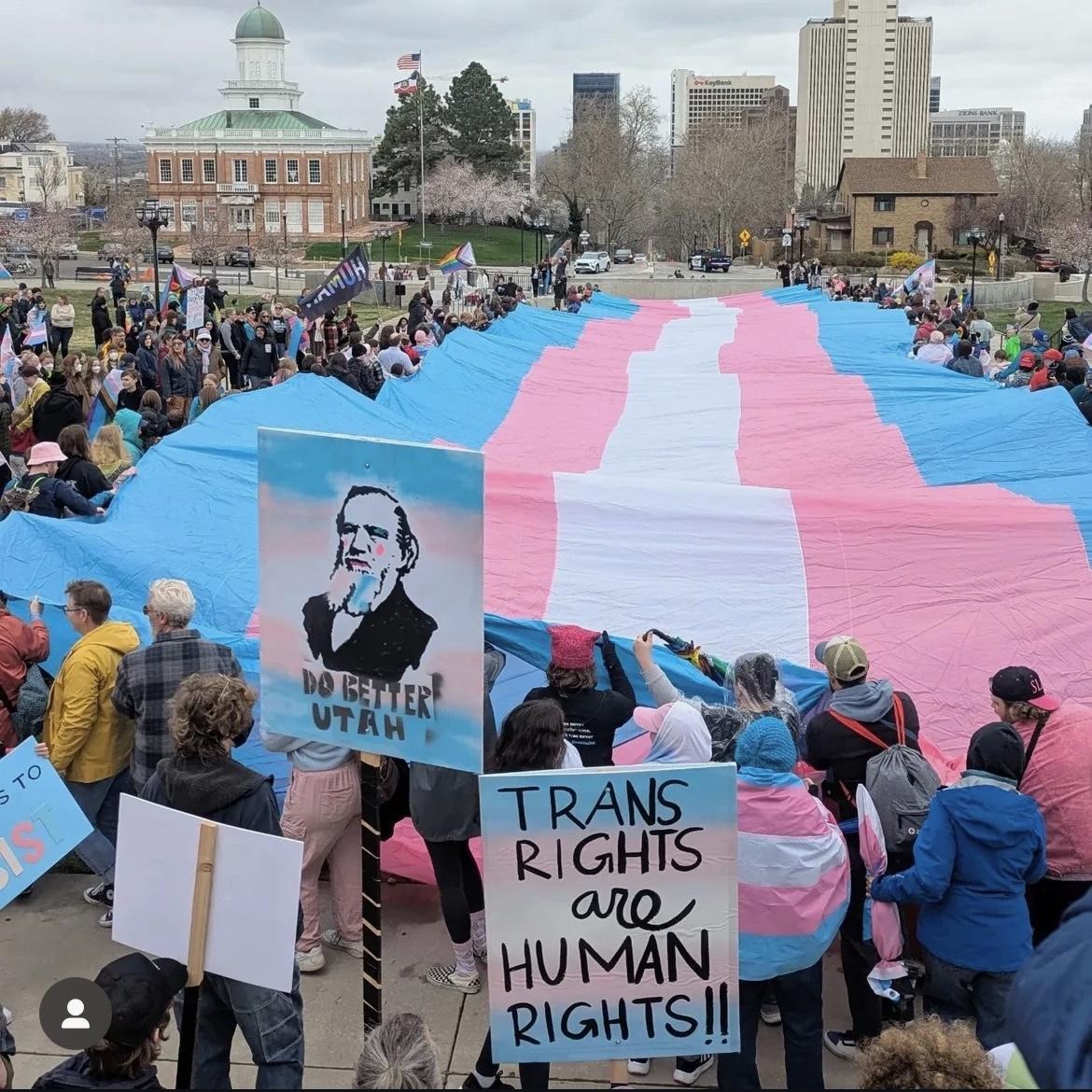
With the ever increasing list of Anti-Transgender policies in the United States, it has become clear that transgender Americans are endangered by their state and federal governments. Despite the insurmountable evidence that transgender healthcare is life saving, state laws restrict access to care and community. The presence of anti-trans laws in a state increase the suicide rates of trans youth by up to 72%, while hate crimes also increase in those states. As the U.S. is a federation, laws vary significantly by state, making internal migration a solution for those affected by restrictive legislation. Recent data from the UCLA Williams Institute found that 48% of transgender Americans have left or have considered leaving their home state/community. Data For Progress numbers show that 130,000 transgender Americans have already left their home. Can this movement be considered forced migration? What would considering it as such mean for the transgender population and for the states receiving them? See Anti-Trans Legislation map by Erin in the Morning
The Role of Sub-National Units
The sub-national units or “states” of the U.S. are incredibly varied in their policies, with a stark difference between Democratic (or “progressive”) leaning states and Republican (or “conservative”) leaning states. To combat the volume of states with anti-trans laws, many progressive states and cities have declared themselves sanctuaries for transgender people. These areas are committed to protecting transgender people from federal and state laws against them. Many sanctuaries have made “shield” or “refuge” laws to prevent transgender healthcare recipients and providers from being prosecuted in another state. This puts the states in direct conflict with one another as transgender people travel to receive healthcare with the possibility of safe return depending on individual state policies. Out-of-state healthcare is already a common interstate legal issue as restrictive states attempt to criminalize travelling for abortion. States – and especially cities – with protections for transgender healthcare may face challenges in court as the policies around them continue to develop.
Migrating Despite Economic Barriers
A study of transgender internal migrants to San Francisco noted key challenges of racism in trans-inclusive settings and structural vulnerabilities such as cost of living. 82% of transgender Americans consider the cost of relocating a significant barrier. Transgender people face a wage gap in the U.S. with one-third experiencing discrimination in the workplace. This wage gap has been noted to be even higher for racialized trans people. The cities and states considered the safest are also among the most expensive to live in, furthering the economic stress. One migrant interviewed describes the economic stressors as a tax,
I hate having to live here because it’s one of the few areas of the nation, I can be treated like a human being cause I’m trans. I have to pay an arm and a leg to live here in exchange for safety and being treated like a regular person. We call it the ‘queer tax.’ [Asian trans man; William] (pg. 1772).
Trans youth who migrate often face homelessness, making up a quarter of homeless youth despite only making up 5-10% of the total U.S. youth population. Many transgender adults also face homelessness with the legal safety found in the state or city being prioritized over financial security. The economic barriers transgender migrants face separates them from other Americans who move to “progressive” areas for political reasons. The sacrifices made for this movement are made from distress, not political difference.
Is this Forced Migration?
Migration within the U.S. is significantly understudied, as most research about internal displacement focuses on the global south. The category of “forced migrant” is in flux as it serves to measure a level of distress but does not encompass the broad experiences of migrants. Research from the Journal of Ethnic and Racial Studies asserts that transgender youth homelessness is forced migration, and the lack of academic and humanitarian inquiry creates a narrative that youth are “causing” their own displacement. Shifting blame from the state to individuals allows the crisis to continue without a wider response to the violence. A lack of acknowledgement of the crisis also leaves the receiving progressive states underprepared for the influx of migrants. Without the language to identify the movement, cities and states cannot adequately serve the community. In the article, Ritholtz proposes “expanding the discipline’s world of inquiry by identifying the “global north” not only as a site of refuge, but also as a site of displacement. This approach expands the concept of state-sponsored persecution to state-abetted persecution”. Since Ritholtz wrote on the subject in 2023, the lines between abetted and sponsored persecution have blurred further as President Trump directly targets gender non-conformity: “it will henceforth be the official policy of the United States government that there are only two genders, male and female.” The President’s direct endorsement of discrimination through the many executive orders made, including those forcing transgender women into men’s prisons, creates severe safety risks for transgender people, especially those living in states without legal protections. Whether these risks can be considered “severe” enough to bring transgender Americans into the category of forced migrant without minimizing other groups remains to be seen (although similar debates surround climate refugees). However, Canada supported the claim of transgender Americans being persecuted persons, with the halting of a U.S. citizen’s deportation because they were non-binary.
Anti-Trans Policies and Their Effects on Human Security
The human security of transgender Americans changes depending on the state in which they reside. They face discrimination, lack of healthcare access, and violence. Trans youth are especially at risk, as states with anti-trans laws have had a 4x increase of hate crimes in schools. Youth face difficulties in migration with financial and social factors impeding their movement. 38% of trans youth are still living in states that have passed bans on gender-affirming care. Transgender adults have more mobility to leave home for places with better protections. In 2022, the top 10 states from which respondents moved because of anti-trans policies were those considered the most “red” or Republican leaning states.
The increasing hostility towards transgender people in the United States needs to be taken seriously. The positioning of the U.S. as being immune to a forced migration crisis only furthers the government’s ability to shift blame. States receiving the influx of transgender migrants need to have the service capacity to meet the community’s needs. Positioning transgender internal migrants as forced migrants creates necessary empathy for the collective strife they undergo. Organizations within the U.S. are working hard to help transgender migrants. TransLash keeps an up to date Trans Relocation Guide while Project Open Arms is dedicated to helping with resettlement to the Pacific Northwest. However, the rights of transgender people around the world are in danger, from Alberta, Canada banning trans-healthcare to Hungary blocking gender marker changes on legal documents. The attack on transgender rights is not isolated to any one country; it is a symptom of a growing right-wing ideology attempting to eradicate difference.


 Dariya Akhova
 Joao Victor Borba
 John Babb
 Katanan Touré
 Elssa Gbeily
 Averill Elisa Frankes
 Isabelle Côté
 Josh Stevenson
 Noah Schwarz
 Olivia Snook
 Tamsin Ford